SOS Blog

Showing posts with label product reviews. Show all posts

Wednesday, June 5, 2019

CERT

About Community Emergency Response Volunteer Teams


An emergency could strike at any moment. Being part of a community that's proactive and prepared increases everyone's chances of survival in a disaster situation. Many communities have existing CERT teams you can join. This blog will provide information about the purpose of CERT, how you can join a team and how SOS Survival Products serves CERTs across the country.

What is CERT?

CERT stands for Community Emergency Response Team. The CERT program helps to educate ordinary citizens about disaster preparation for a wide range of natural and man-made emergencies.

CERT members are volunteers that serve to support professional responders in times of extreme disasters when resources are in short supply. During an emergency, trained CERT members will assist professional firefighters, EMT responders and more, taking on non-technical tasks such as assessing and communicating the needs of the community, putting out small, manageable fires, turning off gas supplies and organizing light search and rescue efforts.
CERT volunteers are highly valued members of the community as they free up trained professional responders to focus on the bigger tasks at hand. The teams will self-deploy when the region in which they are located is affected by a disaster, assessing any immediate losses and implementing the skills they've learned to help first responders minimize further loss of property and life. One of the main tasks of the team is to locate mass-casualties that will require professional response and rescue teams to be deployed. CERTs will also assist in evacuations and more long-term functions such as helping to create temporary shelters.

CERT teams coordinate with all levels of emergency authorities within an overarching system that governs emergency response. This system is referred to as the Incident Command System (ICS), and it allows members to easily fit into the emergency assistance architecture. CERT enhances the capabilities of the ICS by allowing professional responders to focus on complex tasks without facing distractions that could be delegated to citizens with minimal training.

When members of a Community Emergency Response Team aren't actively engaged in response, the team organizes fundraisers, engages with the community by holding teaching and recruitment events, and practices emergency response exercises.


How Do I Get Involved?

LA Community Response Team
Currently, there are hundreds of thousands of trained volunteers all across the nation actively engaged in their local CERT chapter program, but in order to keep these efforts going new volunteers are always needed. Most major cities have an existing CERT chapter, which may contain hundreds of members or just a few.


CERT can refer to one of two entities:

1. FEMA's National program, which uses a set of standardized training procedures to train large groups of community members
2. Local chapters that train emergency volunteers with the help of basic disaster response skills that can vary from location to location.

If your city has a CERT program that's been established through FEMA, you can find it here.
If your search via the FEMA link does not return any results for your city, that does not mean your city does not have a CERT program. You can expand your search by browsing your city's official government website, or by performing a quick Google search.

CERT training is designed to help you serve your community, but also to protect your family, friends, neighbors or coworkers if a disaster suddenly strikes. When properly trained, members of the Community Response Program are able to provide critical support to victims and first responders by mobilizing teams to disaster sites quickly and effectively.

During your CERT training, you'll learn a variety of skills designed to mitigate the effects of a disaster as quickly and easily as possible. While FEMA's CERT training abides by a nationally established curriculum that delivers the same core content across all states, your local CERT training may vary. In both instances, CERT training will be free and you are under no obligation to become a part of the program after completing your hours.
The official FEMA CERT training program consists of nine separate units:

1. Disaster Preparedness (2.5 hrs)
2. Fire Safety (2.5 hrs)
3. Disaster Medical Operations part 1 (2.5 hrs)
4. Disaster Medical Operations part 2 (2.5 hrs)
5. Light Search and Rescue Operations (2.5 hrs)
6. CERT Organization (1.5 hrs)
7. Disaster Psychology (1 hr)
8. Terrorism and CERT (2.5 hrs).
9. Course Review and Disaster Simulation (2.5 hrs)

Products for CERT Teams

We carry a wide range of products designed to fulfill the needs of specific duty assignments in evacuations, light search and rescue, first responder assistance and more. This includes command guides and other literature, safety equipment such as hard hats with accompanying identification stickers, identifying safety vests, identification patches, notebooks, backpacks, duffel bags and kits.
Our CERT kits are designed to help volunteer associates make the most of their training. Basic kits include an identifying vest, hardhat, essential protection from dust and debris, a whistle and flashlight. The intermediate kit provides a more utilitarian vest with pockets and reflective stripes as well as a duffle bag and more supplies. The deluxe kit contains materials for marking and containing utility problems as well as handling

Wednesday, March 6, 2019

good better best products

Good, Better & Best Emergency Preparedness & Survival Essentials

Our customers often ask us for recommendations, particularly when it comes to the basics of emergency preparation. We believe that everyone can and should be adequately equipped to handle the unexpected, and that proper preparation can start with just a few essential items.
We offer a wide range of emergency supplies at various price points. Here's what should be on your list:

Drinking Water Preparation


Good:
Datrex Drinking Water Foil Pouches

Water is essential for life. When preparing for the worst, stock water first and foremost. Datrex drinking pouches contain just over four ounces of water per serving. Each portioned package of water has a five-year shelf life and is Coast Guard approved for safety. Keep these affordable water pouches in your home, car or cabin in the event that other sources of water are not available.

Better:
Water Purification Tablets

If water is available but isn't safe to drink, these affordable tablets are a must. Packaged drinking water will eventually run out in a large-scale disaster, and if you're preparing for the worst, make sure you stock these tablets to treat water when water treatment plants aren't.
These tablets are also pragmatic in camping and hiking scenarios where clean drinking water may become scarce. 
Treat up to 25 quarts of water against giardia and most other microorganisms.


Best:
Rain Collection Barrel

In an emergency, water may be difficult to come by. A true survivalist knows that using the resources that are naturally available are a best bet for long-term sustainability. If a disaster turns into a nationwide or a global crisis, running water will likely be an uncertain commodity. Collecting runoff in a barrel during a rainfall will allow you peace of mind during a crisis.
During a heavy rainfall, you'll be able to collect up to 600 gallons of water with the proper equipment. A functioning gutter or downspout will funnel water to your storage containers, while a filter on top keeps out leaves and debris. Keeping wildlife including birds and lizards out of your water will prevent collected water from becoming contaminated.

Fire Protection


Good:
ABC Fire Extinguisher

Every home should have one ABC fire extinguisher in every major room of the house, including the bedrooms and the kitchen. An ABC extinguisher can tackle all three classes of the most common household fires, which is important since only one class of fire can be tackled using water. Fires fueled by grease, gasoline or electrical equipment cannot and should not be quenched with water, making an ABC extinguisher the only safe solution.


An ABC extinguisher uses monoammonium phosphate, which won’t conduct electricity or scatter grease fires further. These fire extinguishers meet nationally recognized standards for safety and come with a 10-year warranty.


Better:
10-Year Ionization Smoke Alarm

In addition to a fire extinguisher, every home should have a functioning alarm system to help you and your family detect and escape fires before they burn out of control. An ionization smoke alarm is the most affordable smoke detector option on the market, and should be installed in every major room of the house.
First Alert's 10-year alarm contains a lithium battery that's designed to last 10 years without maintenance. Test your alarm once every six months to ensure it's functioning properly.


Best:
10-Year Photoelectric Smoke & Co2 Combination Alarm

Since most deaths from fires occur due to smoke inhalation, installing the right kind of smoke detector is of the utmost importance. A photoelectric fire alarm such as this First Alert alarm detects smoke using a light sensor. This means that when smoke particles scatter the light inside its chamber, an alarm immediately goes off.
Most homes contain ionization detectors, which are cheaper to install and therefore more popular. These types of detectors respond to smoke when particles disrupt the flow of ions in its chamber.
Both types of smoke alarms work well in high-heat, fast-flame fires, however, when it comes to the more common smouldering fires that produce the kind of smoke that kills, an ionization detector falls behind.
Keep your family safe day and night with a combination alert that sounds as soon as a danger is present.


Emergency Communication


Good:
NOAA Emergency Crank Radio with Flashlight

When other modes of communication fail, Midland’s hand-crank radio will allow you to stay up to date on important weather and emergency information in real time. This radio receives alerts from the National Oceanic and Atmospheric Administration, and can additionally be used to receive AM and FM radio signals.
To send messages, this radio offers a built in Morse Code beacon, which can be activated to flash a continuous SOS signal.


Better:
Midland Two-Way Radios - 22 Channel

These short-range walkie talkies can connect with other FRS or GMRS two-way radios via 22 channels. Use the channel scan to check for activity during an emergency, or communicate freely with your family or response team.
Each walkie talkie includes a rechargeable power pack. Four AAA batteries can be used to back up power for longer usage when traditional power sources aren't available.
Connect easily and effectively during all types of events. These walkie talkies remove background noise, offer call alerts and use a roger beep to maximize communication.

Best:
Midland GMRS 50 Channel Radios

Get even more out of your walkie talkie with these radios.
A clear battery indicator lets you know when you can talk freely and when it's time to conserve power. Each radio comes with one rechargeable battery pack, which can be backed up with four AA batteries. Each battery pack is designed to provide up to 12 hours of life.
With a clear communication range of up to 36 miles, these radios offer a safe and affordable solution for a wide range of applications. Each radio features 50 GMRS channels and 28 channels with pre-programmed privacy codes.
Keep up with weather alerts and important emergency news with the built in Weather Scan feature, which finds and broadcasts your nearest NOAA station.


Emergency Kits


Good:
1-Person Fanny Pack Kit

Stocking an emergency kit is a quick, easy and affordable way to take charge of your preparedness and planning. A fanny pack kit contains several convenient items that everyone should keep on hand.
This kit is designed to sustain one person for three days in the event of a sudden emergency. In addition to a 2,400-calorie food bar and 25 ounces of water, the kit also contains one emergency blanket and a range of first aid essentials such as alcohol wipes and non-aspirin pain killers.
Supplement this kit with additional water pouches to ensure you can stay adequately hydrated longer.


Better:
Individual Auto/Emergency Survival Kit

A more robust version of the fanny pack, this auto emergency kit contains everything that's already included in our basic pack, plus a few other extras. In addition, you'll get important essentials such as a flashlight and emergency radio. Everything is contained in a convenient nylon over-the-shoulder bag. Keep it in the trunk of your car in the event you'll become trapped or stranded. Supplement this kit with additional items such as jumper cables to complete your safety kit for the road.
Check out our road trip blog for a complete list of traveling tips.


Best:
1-Person Deluxe Emergency Survival Kit

This affordable pack contains everything you'll need for the first 72 hours of survival. Each Deluxe kit contains 3,600 calories and 76 ounces of clean drinking water. In addition to a variety of first aid products such as alcohol wipes, antibiotic ointments and bandages, this kit also contains waste bags, light sticks, rain gear, gloves, a utility knife and more. We've thought of everything when preparing this emergency kit for you.
The Deluxe kit includes everything you'll need to sustain one person for three days, from hydration to items for proper warmth and visibility. Stow it in your car, at home or at your desk at work.


Tuesday, November 20, 2018

Survivalist Gift Guide

6 Affordable Gifts for Survivalists

Paracord Bracelets

Paracord is the utility string with endless possibilities. This cord can be used to secure cargo, tie items together, fix broken straps or replace missing cordage. It’s great for assisting with rescues, securing animals, keeping shoes tied and so much more.
Each cord is made up of multiple interior strings which are surrounded by a tightly woven nylon sheath. In addition to using the entire utility cord, the strings inside can be removed and used when camping, fishing or in any situation where finer yarn-like string is required.
Paracord is extremely useful and versatile, making it a great gift for practically anyone, particularly hikers, campers and general outdoor enthusiasts.

The paracord bracelet is woven into a compact piece of safety gear that can be worn every day. When unraveled, the user is left with seven feet of 550 cord.
550 cord has a minimum breaking strength of 550 pounds. This strength cord consists of seven to nine core yarns.
Try it together with the paracord dog collar for the perfect outdoor adventure stocking stuffer.


Streamlight Flashlights

Anyone can benefit from a good flashlight. Streamlight flashlights are known for offering superior
illumination and durability, which is why they're frequently used by emergency crews, police officers and firefighters. These flashlights are incredibly reliable, making them not only great for tactical purposes but also for everyday needs. A good flashlight is both a functional and thoughtful gift that will last for years.
Streamlight flashlights come in a range of sizes and offer multiple settings to help the user adjust the brightness quickly and easily. These versatile flashlights are great for campers and roadtrippers, as well as friends and family members who venture out for evening walks with the dog. Add a reflective safety vest for under $10 to complete this safety set.


Emergency Preparedness Kits

A good emergency kit is an irreplaceable piece of safety equipment. Whether you have kids in
college or you and your significant other enjoy extended road or camping trips, a well-thought-out safety kit is simply a must-have.
We carry a range of kits for various purposes. Our basic kits offer security of mind for everyday occurrences such as cuts and scrapes, while our larger kits are designed to support you in an emergency situation where you may be left without food or water for up to three days.

If you're feeling creative, we offer plenty of products to help you create your own emergency pack to give away. A simple Everest backpack provides an easy and affordable starting point to help you put a customized kit together.
Stock a camper's kit with glow sticks, an emergency blanket and a useful weather radio, or customize our road trip emergency kit with items like the ResQMe seatbelt cutter or an auto extinguisher.
Check out this blog post to get started finding the right ready-to-go pack today or for ideas to help you create your own.


Pocket Guides

These affordable pocket-sized guides are available for a wide range of scenarios, and everyone loves how easy they are to follow and digest. They’re great stocking stuffers for prospective first responders, individuals, parents and pet owners.
Each guide offers lots of valuable information in a small package that’s easy to follow and understand. Get instant access to all sorts of emergency procedures, from steps for treating minor scrapes and bruises to taking part in a safe evacuation. These guides are a wonderful idea for trained workers to keep on hand, or for anyone who loves equipping themselves with additional knowledge about preparedness.


Training Classes

There's nothing like a hands-on approach to learning. A training class provides a complete experienceeducational, and bestows upon the recipient the sort of confidence that's needed in an emergency scenario.
that's both fun and
Practice makes perfect. Just as it's important to review your home escape plan or your course for evacuation routinely, practicing CPR or First Aid skills regularly helps to cement ideas that make a behavior more automatic.

We regularly offer classes for first-timers or those wishing to refresh their First Aid and CPR knowledge, and frequently provide other hands-on courses to help build your survival and preparedness skills.


Gift Cards

Some people are harder to shop for than others. If you're not sure which products your recipient needs, wants or would enjoy the most, give a gift card. We carry a wide range of emergency products for civilians, emergency responders and more. Your recipient will thank you for your thoughtfulness.

Wednesday, May 23, 2018

Camping Essentials for Beginners

Basic Camping Skills & Necessities


It's that time of year again: camping season! Before you load up the truck with snacks and smash ball, let's talk essential items. While each camping trip is different, we recommend starting each excursion with some basics.
We offer a range of high-quality camping products, whether you're headed to the mountains with friends or taking the family out for a holiday weekend. Check out our most recommended must-haves below.


Tents

We aren't worried you'll forget one, but choosing the right kind of tent for your trip will be a vital part of your overall experience. With so many kinds of tents on the market, it can be difficult to narrow down your best options. That's why we've done the work for you. We've tried and tested our products for quality and effectiveness and have concluded that either a basic dome tent or an instant pop-up tent will suit most beginner campers.

Basic Dome Tents

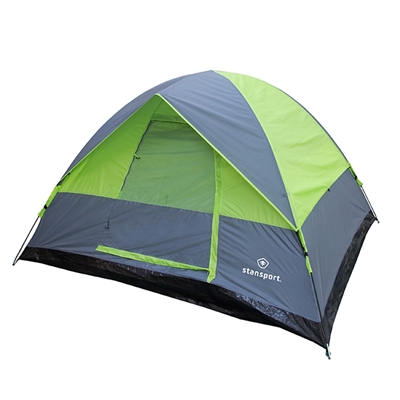
These tents are true to their namesake because they pop up into a dome shape. This means that, unlike with an a-frame tent, you're in for a pretty roomie experience. These tents aren't made for walking around in, but unlike some single-sleeper tents, they still offer plenty of room to breathe. At 4.5 feet high and 8 feet wide, this tent provides enough room to sleep four people, but we certainly won't judge anyone who's looking for that Weasely camping experience.
Dome tents are painless to assemble and break down, and are light and compact for easy transportation. Because these tents are free-standing, you can assemble them completely before staking them into the ground. You should stake your tent securely on all four sides to prevent it from blowing away as soon as a gust of wind comes your way.


Instant Tents

These miniature bedrooms are ideal for extended stays in one location. Setup is easy, although all
instant tents featuring an articulated frame will require more than one person. The more people you have, the easier it is to set one of these up. With the help of your family, your instant tent can be completely up and running in just two or three minutes. A tent like this will easily sleep six people.
These homes away from home are a perfect combination of comfort and the outdoor experience. At 6-feet tall, they offer enough room for most people to walk around in, and the ten by nine-foot floor space provides plenty of space for cots, mattresses, and any additional gear you might want to bring in with you.
The advantage of an instant tent is, of course, its unparalleled convenience. However, this tent will not be for you if you're looking for a backpacking experience, you're traveling alone or you're setting up in windy conditions.


Yes, you could just grab a couple of blankets out of the closet, but here's why you shouldn't:

Space

Unless you're camping in your own backyard, you'll need to pack your gear in a car or truck. As survivalists, we naturally prefer the minimalist approach, but we're sure you'll agree that having adequate seating room for everyone on your trip is ideal.
Sleeping bags are light and compact, they roll up neatly and you can squeeze them virtually into any corner of your car. Depending on how much you're willing to spend, sleeping bags easily fit into or onto your pack, giving you a hands-free experience if you're hiking to set up camp.

Temperature

At higher altitudes, summer temperatures can easily still drop into the 30s and 40s at night. Covering yourself back to front in a comfy cocoon will ensure you don't shiver through the night and wake up stiff and miserable. Choose a sleeping bag appropriate for the weather by checking its temperature rating. We offer summer, winter and three-season bags.


Moisture

Finally, a proper sleeping bag will still keep you warm even when moist or wet. Although you may not be planning on rain, when camping, it's better to be prepared for the worst-case scenario than not. Nothing will ruin a camping trip faster than being underprepared for the weather.


Butane Stove

If you're camping for more than a night, a stove like this will be an absolute essential. Unlike a camp fire, these flames are predictable and will help you prepare more than just s'mores.
If you'd planned to cook food over a fire, consider this:

Temperature control is pretty difficult with an open flame. We get it, a camp fire is one of the backbones of the experience, but we recommend saving the open flame for warmth and light. The temperature control on a portable stove will allow you to boil water to make beverages or cook rice, and it'll ensure that your entre doesn't become a charred brick as soon as you take your eye away from the kitchen for a minute or two.

A butane stove is easy to assemble and disassemble, and doesn't require any wood or other burning materials. You'll use it in conjunction with one of these disposable butane gas canisters, which can be refilled with the help of certain adaptors.
Portable stoves are easy to clean and store.


Gerber knife or Multi-Tool


Think the Swiss Army Knife on steroids. If you think you don't have a lot of use for such a complex tool, think again. While they may look like they require the handling or an expert outdoorsman, Gerber knives and multi-tools are a must-have on the campground, whether you've a professional or a novice.

Multi-Tools

Multi-tools offer a number of effective solutions to the everyday problems you'll encounter while

camping. They can look intimidating, but consider that they're great for basic tasks such as tightening a lose screw, opening a bottle, picking something out of a tight crack, measuring a space or cutting something open. You don't have to be a wilderness expert to utilize a multi-tool in this way, and it'll save you hundreds of frustrating trips to and from your car or toolbox to keep one of these in your pocket.
Keeping a multi-tool with you while camping helps you to prepare for the worst without a ton of extra equipment. These little tools can take on a variety of big jobs to save your time and sanity, and you'll be glad you have one if things ever do go wrong.

Gerber Knives


These knives are similar to multi-tools with the exception that they focus heavily on the knife-aspect of things. Knives tend to be even more intimidating than multi-tools for novice campers, but don't worry: these blades aren't intended for protection. While having a knife in a life-or-death camping situation is obviously more ideal than, say, not having a knife, we know that 99.9 percent of camping trips won't call for violence.
So why bother bringing a knife?
Knives help you to prepare and eat food, cut kindling for a fire or rope for the tent. If you plan on fishing, you'll need a knife. Is there anything a knife can't do? With a creative approach, your knife can handle anything.

First Aid Kit

Let's be real. Whether you're camping alone or with family, both are equally as likely to end with at
least one scraped knee or splinter. We recommend keeping a permanent first aid kit (along with a small fire extinguisher) in your car at all times so that no matter where you go, you're prepared for life's little hiccups.
A small fanny pack stocked with the essentials is a convenient way to keep what you need on your person without taking up extra room in your pack.
Keep a basic starter kit at the campsite or on your vehicle. Your basic kit should contain the following, at minimum:

  • Sterile gauze
  • Tweezers
  • Antibiotic ointment
  • Antiseptic wipes
  • Butterfly wound closures

We also recommend carrying eyewash for those pesky dust or ash particles that are a part of every camping experience.

Become an Expert Camper & Outdoor Survivalist


If you want to take your camping or wildlife experience to the next level, you'll need more than the proper tools; you'll need proper preparation. There are plenty or websites and books on the topic of minimal and wilderness camping, but when it comes to emergency preparation, we prefer a hands-on experience.

The 2-day wilderness first aid course will teach you everything you'll need to know about making proper assessments, treating cold or heat-related injuries, taking care of broken bones or spinal injuries and more.
You'll have a superior hands-on experience and receive expert advice and answers to your questions along the way. Remember that you need to be CPR certified in order to take this course and be at least 14 years of age. We offer training classes throughout the year, or check with American Red Cross to find a class that’s starting now.
This course is based on the Boy Scouts of America Wilderness First Aid curriculum and doctrine guidelines, and uses OSHA's best practices for workplace First Aid training programs.


The Fire Starter

Ready to try your hand at an advanced skill today? The fire starter is one of our favorite camping tools because it is easy to use, affordable and small enough to tuck away in any pocket.
You learned it on Lost in Space: Magnesium burns hot and is unaffected by water! Never mind the logistics of melting ice with a magnesium fire, all you'll need for your camping trip is one block of this fire starter and, of course, your knife or multi-tool.
This little guy isn't just a cool way to impress your friends, it'll be your lifesaver in an emergency. This fire starter will let you build a fire with little other resources at hand.
If you're considering taking your camping experience to the next level, be sure you check out our article on fire safety and wildlife fire prevention.

What you'll need:

To successfully start a campfire, you’ll tinder, kindling and firewood.

Tinder is the stuff that helps you start your fire. It's super dry and will burn up quickly, such as dry leaves and dry grasses. One major advantage to using a fire starter is that it will allow you to work with damp tinder.


Kindling consists of small sticks that will help you to grow your fire. Make sure you have plenty of kindling to get a sizable fire going before laying on any large firewood.

  • Start with a small amount of tinder and surround it with a "teepee" of kindling.
  • Take your magnesium block and, using a knife, scrape off some shavings of magnesium into your tinder. These shavings are incredibly flammable and will burn very hot and very quickly once they come into contact with a spark.
  • Now, use the fire starter to create a spark. 
  • Keep adding kindling to grow your fire.
   
Once your fire is burning strong and you can feel the temperature rising, it'll be time to add larger logs one at a time.
You can continue the "teepee" method by laying blocks of wood against one another or you might prefer a pyramid approach. Don't add too much firewood at once. Making a lasting fire takes patience.


Remember that no matter where you are, building your fire safely so that it can't burn out of control should be paramount. If you don't have a fire pit to work with, you'll need to create your own. Keep in mind that you should only be building your own fire pit in an undeveloped area in case of an emergency. Build a fire to stay warm, deter wildlife or to signal for help.
Do you have a favorite camping tool or safety tip? Let us know in the comments below.


Tuesday, March 13, 2018

SOS Survival Products Awards


Welcome to the 2018 SOS Product Awards! We think it's about time that some of our products get the recognition they deserve, so we've selected a few of our favorites (and yours) to ensure everyone gets a chance to see what all the buzz is all about. Without further ado, we present...

Best Visual Effects!

The Streamlight Strion features three easy-to-control brightness settings and one strobe functionality.
To ensure your safety, whether you're stranded roadside or use your flashlight for tactical purposes, the LEDs on this torch produce 500 lumens on the high setting, the equivalent of a 33-watt incandescent lightbulb. On this setting, the Streamlight Strion is capable of running for one continuous hour. Its low setting produces a comfortable 125 lumens and will provide you with light for more than three hours.
Because the torch is rechargeable, you'll never need to worry about stocking up on batteries or finding them in the dark. The Strion recharges within just three hours.
This bright flashlight earns its spot as number one in the visual effects category because of its lumens. A lumen is a measurement of total visible light. When the Strion's lumens are concentrated into a tight beam, they produce 10,000 candela reaching up to 200 meters.
For a more concentrated beam, try the Streamlight SL-20L. This rechargeable flashlight can't compete with the Strion in terms of lumens, but with an astonishing 60,000 candela at its disposal, its beam reaches 490 meters!

Not sure how lumens and candela differ?

A lumen is a unit of measurement used to describe how much visible light is produced by a light source such as a flashlight or a lightbulb. Because light scatters, a flashlight's lumens aren't necessarily indicative of how far its light will reach.
A candela is a unit of measurement that describes how far away you can be from a light source and still see it. The more concentrated a beam of light it, the more candela, or candlepower, it will have.

Best Design!

At SOS Survival Products, we're all about functional living, preparation and survival. We know that
in the event of an emergency, the more minimal your dependence on outside resources, the better your chances of success. Check out our blog about collecting rainwater here.
The Goal Zero Yeti 150 Solar Generator is an alternative solution to small gas-powered generators. This unit is perfect for the home or for camping trips. The Yeti stores 150 watt hours of power, and can be charged using an AC wall adapter or solar panels.  This gas-free, noise-free and fume-free power generator is ideal for smaller devices such as lights, cooling fans, phones and laptops. An indicator display lets you know how much time and power is left at all times.
With two USB, one 12V and one AC outputs, it's easy and convenient to plug in several devices at one time.  Power it up in preparation for a storm to keep all of your electronic devices readily charged during an outage. This unit is incredibly easy to use, easy to setup and easy to understand.


Best Sound!

During an emergency or extreme weather event, it's critical to stay informed. These days, most of us largely rely on our phones, computers or televisions to stay up to date on weather alerts and emergency broadcast.
The Midland ER200 radio is there for you when other sources of communication fail. During power outages, when your stock of batteries has unexpectedly been emptied or when cell towers are overwhelmed, this hand-crank NOAA radio will be by your side.
The Midland includes a powerful three-setting flashlight, AM/FM radio, NOAA Weather Alert Radio, USB and headphone jacks and an SOS beacon which uses Morse code to signal for emergency assistance. Although it contains a rechargeable battery and a small solar panel, it is also fully functional when cranked by hand. Attach it to a larger solar panel for quicker and more efficient charging in an emergency situation.


Most Original!

Sometimes originality comes in small, simple packages. The LuminAID PackLite lantern started out as a project designed to provide light to earthquake victims in Haiti. Today, LuminAID accompanies hikers, backpackers and emergency aid workers alike.
This uniquely powerful little lantern has come a long way since 2010. Designed to fold flat for easy and convenient storage, it features five brightness settings, adjustable straps and a microUSB charge port. As always, the LuminAID lantern remains 100 percent waterproof. On its highest setting, it puts out an impressive 75 lumens.


Lead Product!

Emergency planning starts with just a few essentials. Although we rely heavily on a variety of basics including food and proper shelter, we can't survive long without water. Up to 60 percent of the human adult body consists of water, powering our cells, lubricating our joints, regulating body temperature, converting food to energy and more. We are so reliant on water, that it only makes sense that our most-ever purchased product is, well, water.
We carry a variety of water pouches, water containers, water collection barrels and water purifiers. To start, we recommend every household contain an absolute minimum of 25 ounces of clean emergency drinking water for every person. Just six single packages will be enough for this. These pouches are tough and will store safely for up to five years, so keep them in your emergency pack, in your car, your camping gear or at your desk at work.
Looking for a bit more? A kit such as this provides the most basic essentials for only $8! This three-day kit contains six single Datrex drinking water pouches, one emergency blanket and a 2,400-calorie food bar.


Best Overall!


Emergency planning encompasses a variety of aspects. Creating an emergency plan and stocking up on the right products can turn a disaster around into a success. If you're not sure quite where to start, or your funds are limited, we recommend one of our kits. The two-person Deluxe kit is designed to offer the biggest bang for your buck, with products including water, emergency lighting, emergency blankets, rain ponchos and a wide range of first aid products all in one place. Everything is neatly contained in a convenient Everest backpack and is designed to provide for two people for three days.
Prepping for an emergency can become an involved process. While it's important to consider your ultimate goal when putting your emergency prep plan into action, we recommend beginning with the basics: a plan, water, shelter, first aid and emergency communication. It takes just a few products to provide some initial peace of mind in an emergency situation. From there, the sky's the limit.

Thursday, February 8, 2018

NOAA’s National Weather Service Saves Lives Every Day

The National Weather Service was established on February 9, 1870 and we have President Ulysses S. Grant to thank for it. However, he wasn’t the first person in our country’s history to recognize the importance of weather tracking. Weather patterns are so critical to our daily life and survival that even our Founding Fathers made regular weather observations and recorded temperatures. In fact, Thomas Jefferson owned one of the only barometers in America at that time. Unfortunately, there was no way of making large scale, impactful insights until the invention of the telegraph.


Momentum started building in 1849, when the Smithsonian Institution provided basic meteorological instruments to telegraph companies like Bell. With the help of telegraphs, 150 people that year were able to record weather patterns and temperatures side by side, and then share them with the network to create the very first weather maps. Just over a decade later, there were roughly 500 weather stations set up throughout the US, all tracking weather observations on a daily basis. For the first time, enough people were measuring weather patterns at the same time to be able to chart the data and make predictions about the weather.
During the next decade, the first national weather service – later officially called The National Weather Service, grew from a volunteer network of various weather stations. Back then it was a division of the Army, but by 1890, Congress passed legislation that reassigned weather services to the U.S. Weather Bureau in the Department of Agriculture. In the next year, they started issuing the first flood warnings.

Just at the turn of the century, cable connections were made between U.S. and Europe, allowing for weather warnings to be passed back and forth at greater distances. By this point, communication was beginning to be so expansive that the Weather Bureau could actually forecast events up to three days in advance. Having already established a hurricane warning network in the West Indies, the Weather Bureau was able to start the hurricane warning service in 1935.
With the growth of the Weather Bureau came the realization that weather services weren’t just an invaluable tool for farmers and workers in the Agriculture industry, so the whole assembly was transferred to the Department of Commerce in 1940. In 1950, the first official tornado warning service was established, and in 1960 the first weather satellite started orbiting our stratosphere.
By 1970, the Weather Bureau was renamed to the National Weather Service after being absorbed by the National Oceanic and Atmospheric Administration (NOAA). What started out as 150 volunteers sharing weather observations was now a major national organization with over 11,000 weather stations.

Today, the National Weather Service is more accurate and expansive than ever. A person can easily check weather forecasts, storm maps, and local Doppler radar information on the National Weather Service website.

More importantly, even during emergency situations with power outages, it’s still possible to receive weather updates on radios with hand crank or solar powered functionalities. The National Weather Service makes it possible to get weather updates and check the weekly forecast from your phone by downloading the National Weather Service app. However, critical weather alerts in your area are sent to your phone via SMS, regardless if you have the app installed.
Every year, the National Weather Service saves thousands of lives with their weather alerts. Prior to their detailed forecasts, the population had little to no warning of severe weather or storms. Today, thanks to major technological advances, strong communication, and better forecasting than ever, the National Weather Service can predict and broadcast alerts about major events such as Hurricane Harvey, which resulted in fewer than 100 casualties last year.


Tuesday, December 19, 2017

Emergency Preparedness Kits

SOS Survival Products offers a wide range of emergency preparedness packs. We recommend an emergency preparation kit for every home, office and dorm room. Here, we'll break down four of our most popular kits and their purpose.

Basic Emergency Survival Kit

This survival kit is intended to sustain one person for three days. This kit does not contain first aid management products. It is ideal for situations where a person may become stranded without access to clean water, food or shelter. We recommend every home stock at least one of these affordable packs for every individual in the household.


Included in this basic kit is one Mylar thermal blanket, 2,400 calories of food and just over three cups of individually packed drinking water satchels. The food and water in this kit have a 5-year shelf life, giving you long-lasting assurance whether at home or away.


How do I use this kit?

Drink water regularly to ensure dehydration does not occur. Eat if you are hungry.

A Mylar blanket's reflective silver side can be turned inward or outward to offer protection in hot or cold conditions. You may use it to reflect heat toward you or away from you. Wear the sheet like a blanket, tucking in loose ends, make a makeshift shelter to keep out rain or sun, or cover your home’s or car’s windows.


1-Person Deluxe Emergency Survival Kit

This kit contains nearly ten cups of water, 3,600 calories and an emergency blanket. This is a more robust and complete 1-person solution to basic emergency preparation, whether at home or on the road. In addition to food, water and shelter, this kit also includes a variety of first aid products to stop bleeding and infection. This kit also includes emergency lighting, a whistle to help you get noticed, an emergency radio to help you receive important updates, rain gear, a knife, heavy-duty gloves and more. This selection of vital emergency products is stored neatly and conveniently in a bright red Everest backpack. Keep it in your trunk or under the bed for easy access no matter where you are.

This kit is also available for two or four people.


Pet Emergency Kit

We strongly recommend that your emergency stock includes enough supplies to support each member of your household for three days. In an emergency situation, when you may have no access to clean drinking water, you shouldn't have to face difficult choices like how to divide your resources appropriately.


This pet emergency kit gives you the peace of mind you'll need should disaster strike. Each kit contains 100 ounces of clean, individually-packaged drinking water, a dish, universal lids for canned food (you supply your own favorite brand), can opener and emergency blanket. Additionally, your pet kit supplies a variety of first aid products for minor injuries such as cuts, scrapes or splinters.

Pro Tip
In an emergency situation, you want each member of your family to feel as comfortable as possible. We recommend speaking to your vet about a carefully dosed NSAID you can add to your pet’s emergency pack. Never administer medications intended for human consumption.


5-Person Trauma First Aid Kit

This kit is a perfect addition to your family’s three-day food and water emergency preparedness kit. This 5-person bag provides a variety of products to clean, treat and bandage wounds ranging from eye injuries to bleeding. This pack contains everything needed for first response, but also offers an excellent solution for family homes or small businesses. The included first aid manual provides instructions and information to help remind you how to provide basic first-aid in the event of an emergency.

When disaster strikes, knowing the basics can be the difference between life and death. This emergency pack and its handbook are designed to help you put to use the skills you've already learned during an emergency course. We recommend preparing yourself for a real-life emergency with a hands-on course in first aid, CPR or both. If you reside in the Van Nuys area, check out our upcoming schedule for classes in first aid, pet safety and outdoor survival.

This kit is also available for 15 people.


Sunday, August 13, 2017

Basic Safety Preparation for Everyone

No matter the size of your household, whether you have children, pets, both or neither, basic preparation and emergency planning are always advisable. In this post, we'll outline some of the bare essentials every person should equip themselves with for everyday safety.

When we think of preparedness and planning, we most often consider the major disasters; floods, earthquakes and fires tend to be in the forefront of the planning mind. We'll discuss planning for disasters like these a bit later on, but first let's talk about the five major offenders of accidental death and injury.

According to the National Safety Council, accidental deaths and injuries most commonly include poisoning, vehicle crashes, falls, choking/suffocation and drowning.

Poison Safety

In recent years, poisoning has become the leader of accidental deaths, surpassing vehicle accidents for the first time ever, due to the availability of opioid drugs such as hydrocodone, oxycodone and fentanyl.
To learn more about this epidemic and how to prevent it, visit this link.

The Basics

  • Take medication only as prescribed
  • Never share medication
  • Store addictive substances safely

Advanced


Car Safety


According to the Association for Safe International Road Travel, Over 37,000 people die in road crashes each year, 1.3 million people worldwide. The National Safety Council reports that about one-quarter of car crashes are attributable to using phones while driving.

The Basics

  • Don't drive impaired or distracted
  • Adhere to posted speed limits
  • Wear a seatbelt

 
Advanced


Falling Accidents


A fall can affect anyone, no matter what age. However, according to the CDC, falls affect one in three adults over the age of 65. Most often, falls occur at home and can be prevented.


The Basics

  • Declutter walking spaces
  • Secure carpets
  • Add non-slip adhesives and non-skid matts

Advanced

  • Install hand railings
  • Replace lighting to create more visibility
  • Adjust cupboards and appliances to eliminate the need for ladders


Suffocation & Choking Accidents


The Basics

  • Know the risks
  • Recognize the hazards

The most common risks for choking are eating too fast or too much at once. Suffocation occurs most commonly in children under one year of age. Choking occurs most commonly in adults over the age of 80.


The most common food hazards include:

  1. Hot dogs
  2. Meat and cheese
  3. Whole grapes
  4. Hard candy
  5. Popcorn
  6. Bagels
  7. Peanut butter

Advanced

  • Learn the Heimlich Maneuver
  • Learn CPR


Drowning Accidents


According to the National Safety Council, 10 people drown every day and most will be under the age of 15.

Children drown most often in:
  1. Pools
  2. Bathtubs

    The Basics

  • Don't leave kids unattended even for a moment to answer the phone or grab a towel
  • Don't let kids play near water
  • Teach kids about the dangers of water

Advanced

  • Enroll kids in swim lessons
  • Install safety fencing
  • Install door alarms
  • Learn First Aid & CPR

Adults can drown, too. For more information about water safety for everyone, visit this page.

Being prepared for everyday risks provides a great foundation for awareness and safety in more difficult scenarios.


Fire Safety


Accidental fires are the sixth leading cause of death in the U.S. More than three-quarters of fire deaths occur at home when residents walk away from the stove, leave candles unattended or smoke inside. For more information about fire risk, safety and prevention, check out this post.

The Basics


Advanced

  • Invest in monitored smoke detectors
  • Install a sprinkler system

Natural Disaster Safety


Natural disaster safety encompasses a wide range of topics including preparedness for earthquakes, floods, tornadoes and hurricanes. Your chances for encountering one of these types of disasters will depend on where you are located. For more information about which disaster you're most likely to encounter and how to properly prepare yourself for these, check out this post.

The Basics

  • Keep a flashlight and radio handy
  • Download a mobile weather app for warnings and alerts
  • Know your safe place and escape route

Advanced


SOS Survival Products provides a variety of affordable safety training courses including CPR, First Aid, Fire Safety and general preparedness. For more information, see our schedule.

Wednesday, June 14, 2017

Pet Preparedness with SOS Survival Products


At SOS Survival Products, we believe that preparedness is the key to conquering any emergency situation. By equipping yourself with the right products and the right knowledge, you and your family can prevent the unthinkable.

If your family includes a pet, you'll need to take additional steps for preparation.
If you have not yet planned for yourself, check out this blog post geared to help you get started.


Your pet has basic needs similar to yours. Food, shelter and essential medicines will ensure that he or she will make it through an emergency alongside you. In addition, we offer a variety of products to help you ensure that you're prepared and well stocked otherwise. Our emergency preparedness products for pets include books, ready-to-go emergency kits and helpful accessories.


Emergency Books


During an emergency, time is of the essence. When disaster strikes, you'll need to know who is in charge of your pet or pets, what you will take and where you will go. Practice your escape plan with your pet in order to gauge how long each step in the process will take you. Is your pet skittish? Where are his or her most common hiding spots? Will your pet respond to food? Is it difficult to confine your pet? These are all questions you should ask yourself when making a plan for you and your family.

Our selection of books includes the Pet Preparedness Guide, an affordable pocket-sized book geared toward helping you create an emergency evacuation plan that includes your pet. This book provides helpful steps to assist you before, during and after a disaster.


If you choose to purchase any of our first aid books, we strongly recommend that you and your family also enroll in a first aid and CPR preparation course for your pet. Courses like these are becoming increasingly more common, and can therefore easily be found through your local resources or here, if you reside in or near Van Nuys.


Emergency Kits


Once you have solidified an evacuation plan, you'll need to prepare a go-bag for yourself as well as for your pet. You can purchase completed kits through our site here. Our ready-kits include basics for survival such as water and blankets, as well as common emergency products including antiseptic wipes, gauze and eye wash.


To create your own pet evacuation kit, first make a list of your dog's daily needs. This list should include water, food, warmth and any medications your pet needs on a daily basis. Additionally, your pet may need to be confined, require a leash, identification tags and waste disposal bags. We recommend that you keep these items separate from the items you use every day so that an exit from your home can be swift and easy.
In addition to the daily essentials, your pet's kit should include first aid equipment. The emergency kits sold on our site offer an affordable solution and provide products for a wide variety of emergency scenarios.


Emergency Accessories


Our selection of emergency accessories for pets includes harnesses, collars and leashes, tick remover, collapsible food bowls and more. Although you may already own all of these items, we simply recommend doubling up on essentials like these. As you prepare to leave your home, it's not uncommon for Murphy's Law to take over. Items can break or be forgotten, creating the potential for additional disaster.


SOS Survival Products provides items and resources for emergency preparedness for your entire family, including your pet. If you don’t see something you’re looking for, contact us today.

Friday, January 20, 2017

Product Review: Student Emergency Kit


As members of the senior class of 2017 gear up to enter a new chapter in their lives, parents all across America are scrambling to make preparations. From living arrangements to school supplies, there's a lot that goes into adequately preparing for the first year of college. If you're a parent of a graduating teen this year, you may also be dealing with the natural fear of sending your child into the world alone. At home, you've made an emergency plan and stacked supplies for your family, but the dorm room won't be equipped with these things.

Our Student Emergency Kit contains everything your student will need to sustain himself or herself for three days in the event of an emergency. This handy cardboard box is extremely compact and affordable, making it easy to stock several in various convenient places.

Instruct your student to keep one in an easily accessible place in his or her room while keeping another in the car. In case of an emergency, this kit will provide six 4.227-oz. U.S. Coast Guard-approved water packages, each with a five-year shelf life, an emergency blanket, one glow stick, nine wet wipes and a 2,400-calorie food bar.

Because this kit contains only the essentials, it's versatile enough to be used in a variety of situations. Keep one in the car for yourself, pack it away in a suitcase when traveling or keep one at the winter cabin. Everything the Student Emergency Kit contains is resistant to hot or cold temperatures and can be safely kept for up to five years!